Monthly Archives: November 2011

next stage

reviewing documentation, further research, writing & planning ..

Following the series of introductory visits to collections and the myriad of items I’ve seen in each one of them (Wildlife, Insect, Botanic Garden, Herbarium, Plant Phenomics and Soil), the conversations and concepts discussed, this project moves to another stage and to a different level of the research process. While there are still a number of collections I’ve yet to visit and I will also returning to these first ones, there are a number of different sorts of tasks and activities underway concurrently. One of the first practical tasks is to attend to the already considerable amount of written, visual and audio material that I’ve accumulated from each collection I’ve visited: it needs to be edited, labelled and evaluated and as I continue to document its an ongoing part of the project. Some of it I’ll use directly in work I produce for the residency and some will be retained for future reference, some is discarded and some finds it way into this account of the project. I begin following up conversations I’ve had with a number of people at each of the collections about their own research and this means researching, revising and reading from general to specialist areas some I’m familiar with and others are new, so I revisit the biology text books, popular science and specialist publications. Though well into reading and enjoying Richard Holmes’ The Age of Wonder, and my focus shifts (not too far), to the taxonomy and evolutionary theories of the eighteenth, nineteenth, twentieth and twenty first centuries: cherry picking from Linnaeus, Darwin, the evolutionary biology of A O Wilson, Stephen Jay Gould, Andrew Parker to Systematic Entomology and CSIRO scientists “Integrative taxonomy or interative taxonomy?” (209-217). There is much to absorb and enjoy.

Another aspect of this stage of the project is planning and preparation. There are series of conversations and meetings with Discovery’s director Cris Kennedy throughout Aug – Sept about realizing the project’s outcome(s), Discovery’s programme schedule and CSIRO — pragmatic and conceptual. Part of this [plan] is for a Symposium and in light of the project’s conceptual focus and intention proposed in our application to ANAT, I start to review and assess other (numerous) art/science-science/art talk-fest- conferences and talk to colleagues. There is no value reinventing the wheel, so by clarifying the scope and focus of this event it does develop its own identity and name (Spectra2012)! The latter shifts the discussion further and Cris and I meet this time with academic writer and artist Mitchell Whitelaw (University of Canberra). This conversation and the planning continue.

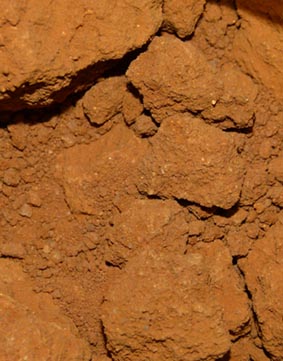
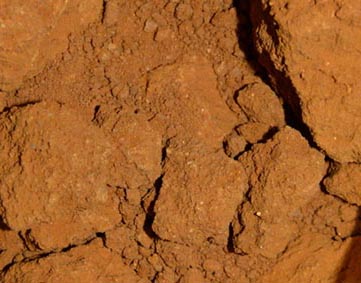
This is also the first follow up visit to a collection and I return to the Soil Archive. Over three days (Sept) I re-examine some of the historical material, it’s a chance to take in the collection again —and with the Munsell Soil Color Charts at hand to look more closely at the contents of some of the thousands of neatly stacked soil specimens and to document these further. As well as this David Jacquier (ASRIS) and Linda Karssies (the Archivist) walk me through a number of the research laboratories in Land and Water. In one of these is Seija Tuomi who explains her work running the infra-red spectrometer lab, its applications and the spectrometer which makes rapid methods of soil assessment possible for research. On this (return) visit there is also a valuable opportunity to meet with the Dr Neil McKenzie Chief of CSIRO Land and Water Division. This meeting, the conversations with David, Linda and others, my experience of  the Archive, the laboratories and the literature on soils, all contribute to my appreciation of this collection and (in the context of the others) —its significance.
 

collections Black Mountain cont…National Soil Archive


leap of imagination—National Soil Archive (August 2)

The biological collections I have seen and described so far in this blog, the wildlife, insects and plants correspond with the expectation of rare, curious or noteworthy of things being collectable. Before the systematic sorting and classifying taxonomy of natural history collecting in the eighteenth and nineteenth century Europe, these things, were found in the sixteenth century reference collections used by early naturalists such as Ulisse Aldrovandi and Conrad Gesner. Although whimsically referred to as ‘cabinets of curiosities, rarities’ or Wunderkammer the purpose and intent of these collections was for a comprehensive and universal understanding of nature. Various other curious objects and artifacts were in these collections as well as geological samples and in a sense these correspond most with the next collection and demand a leap of imagination. From evidently realized things that can be readily seen, touched, experienced and well understood to have been once growing and moving, to the enigmatic, inscrutable phenomenon of soil. Soil collection and the science and study of soil —Pedology (and processes that form it—Pedogenesis), date from the work of the Russian geologist Vasily Dokuchaev in the second part of the nineteenth century.

In contrast to the flora and fauna featured in the other collections the form and definition of soil material obviously very different stuff and apart from the immediate and superficial layer, for the most part it is generally out of sight and out of mind. Its deceptively complex and characterised by (the) extremes of scale: on the one hand connecting climate systems, topography and vegetation, on another (scale) a plethora of micro-organisms (animal and plant) and minerals. It has a central role in biological systems, land management, agricultural activity and environmental research.

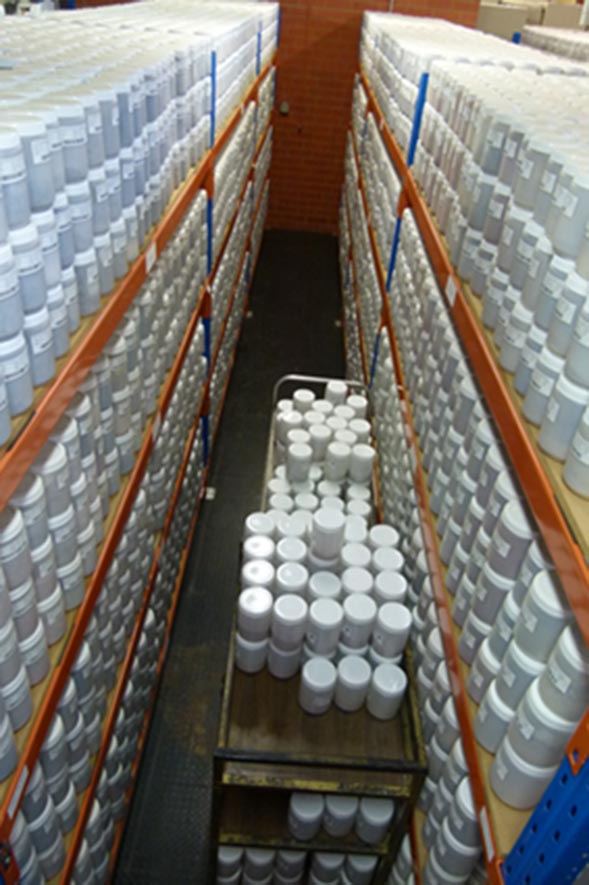
The collection is part of CSIRO Land and Water Division and a meeting (2 Aug) in Discovery Center with Peter Wilson who manages a team of soil data and geographic information specialists, David Jacquier ASRIS (Australian Soil Resource Information System) and Linda Karssies the National Soil Archive manager, reveals its significance as a resource for the Division’s research program and other wider environmental research projects. We head off to the Soil Archive located at the top of Black Mountain to begin a comprehensive tour of the collection. The warehouse style building is filled from floor to ceiling with rack after rack of industrial scale shelving, each one closely packed with uniform one-litre jars of dried, analysed and labelled (and barcoded) samples. There are there are over 71,000 soil samples from 9,500 sites across Australia and each site is represented by numerous specimens that systematically sample the differences in soil as it changes (horizons) at the depths below the surface. Adjoining this area of the archive are the racks of shelving boxes and crates holding thousands of specimens from CSIRO and other organizations collections they are the ongoing task for the archivist.

In addition to these boxes of specimens destined for the archive, there are historic soil samples: pre1945 they are free of chemical contamination from pesticides, herbicides and pre nuclear testing. In a quaint old fashioned filing cabinet (green paint and rusting draws) there are pink cards filled with hand written copperplate script describing sites and soil data from the 1920s; in other rooms and offices are more files and shelves of large leather bound account /record books, boxes of official forms with carefully drawn maps of locations and sample sites (1960s?), boxes of 35 mm Kodak slides show views of/from collection sites, glass soil slides and more recent (but still) dated looking computer printouts sheets. Apart from the intrinsic value of the data, this historic legacy of sampling is in itself an account of the shift in methodology and technology of data collecting, analysis and archiving across the twentieth century.

In a paradoxical way the seemingly obscure Soil Archive highlights key features that are also central to the other collections. As well as the taking care of their own range of unique specimens and developing the material to be a relevant resource and reference for research they utilize an array visual systems. Visualizing technologies are used to comprehend data and offer new insights about material specimens through analysis (such infra-red scanning), images are central for data management, access and interpretation in visual systems such as mapping. The soil information available in the Australian Soil Resource Information System (ASRIS) <www.asirs.csiro.au> uses coloured maps, satellite images, tables, graphs and photographs. Considered together with the other collections, the National Soil Archive continues the quest of early naturalists who first sought a comprehensive and universal understanding of nature.

<http://www.clw.csiro.au/aclep/archive/index.htm >


CSIRO Black Mountain biological collection visits continue ….


There are two more collections at Black Mountain to visit before I begin the next stage of this project, are The Australian National Herbarium (29 July) and the National Soil Archive (2 Aug). The first of these the National Herbarium where approximately 1.4 million dried plant samples from Australia, New Zealand, Indonesia and Papua New Guinea are preserved recorded and systematically classified for plant research.

The collection is a reference of botanical information and as the Centre for Plant Biodiversity Research is a collaborative organization between CSIRO Plant Industry and Australian National Botanical Gardens (Department of Environment, Water, Heritage and the Arts [DEWHA]). Plant scientists / researchers, students, technicians and voluntary workers have access to the specimens and described it is an integral part of plant industry science research. <http://www.csiro.au/places/ANH.html>. An online resource with public access is the AVH is Australia’s Virtual Herbarium < http://www.chah.gov.au/avh/>

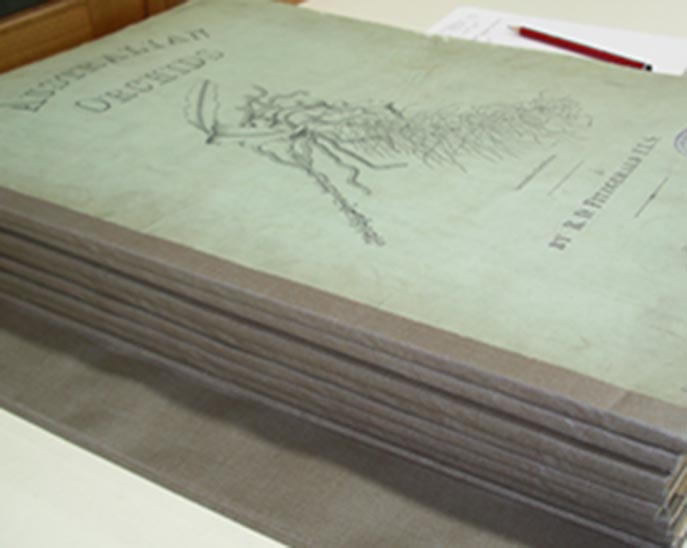
Some specimens, such as those from Captain Cook’s expedition in 1770, have unique historical significance as well as botanical value. In response to my interest in re-examining a threatened plant the Crimson Spider orchid (Caladenia concolor), Collections Coordinator Jo Palmer located specimens for me. The many labels along the side of the specimen sheets highlight the issue of revision and reassessment in systematic classification and plant taxonomy. Some of the labels on these specimens had changed since my previous visit to the herbarium in January when I had been looking for its type specimen. Then, with the help of specialist knowledge from the Technician Anna Monro we compared the names of dried specimens and their descriptions to the research literature. It was confusing. Similar looking specimens had been re-grouped and re-named and I started to wonder which one I was actually looking for and what it’s name really was —I could only distinguish it with reference to the location in north east victoria where now it rarely occurs. It was in the herbarium’s library that Anna located an image,— in Robert Fitzgerald’s Australian Orchids of 1878, which would serves as substitute for the real thing what can be called an icon-type specimen. This delicately hand coloured lithograph presented another version to the specimen sheets and to the colour photos that I had seen already.


Based at the Herbarium is the team working on developing the remarkable online resource—the encyclopaedic project Atlas of Living Australia. <http://www.ala.org.au/ > It is a national database of flora and fauna and a phenomenal concept and resource for collecting extending and interpreting data, developing understanding and knowledge: it reflects the dynamic nature, relevance and significance of the collections and links the research relating to them. A collaborative project with other organizations, the Atlas not only posits the biological collections in a contemporary context and articulates the relationships between them.