Monthly Archives: August 2011

changing places….


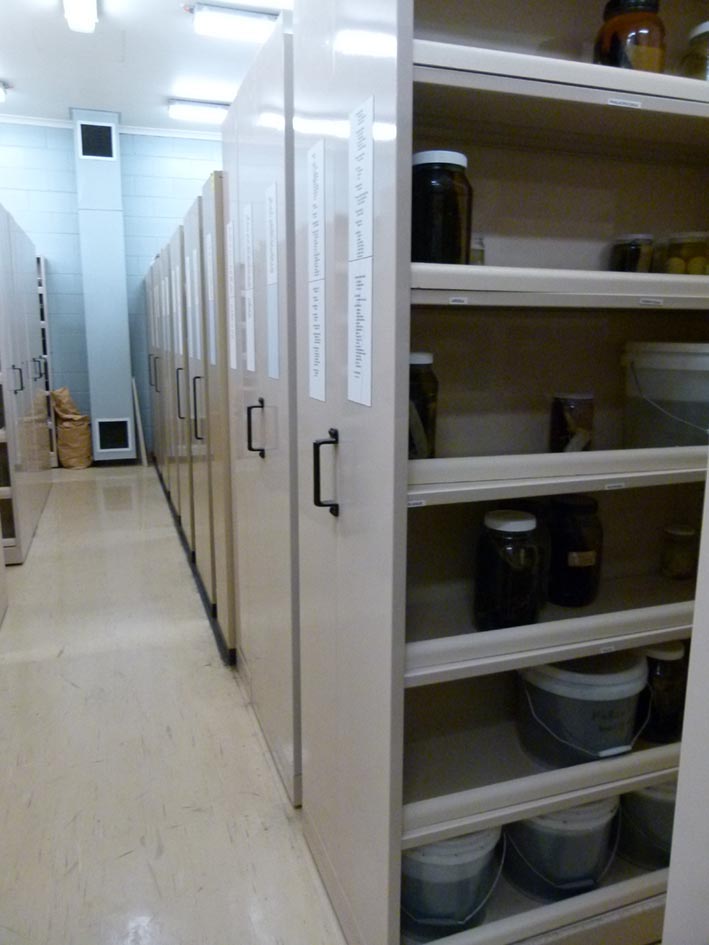
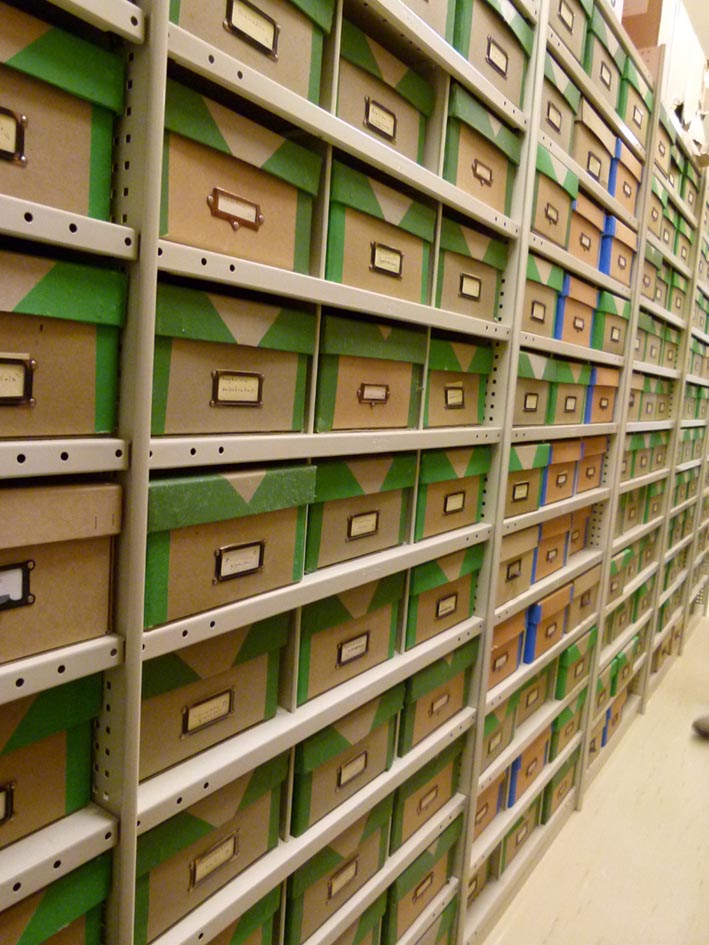
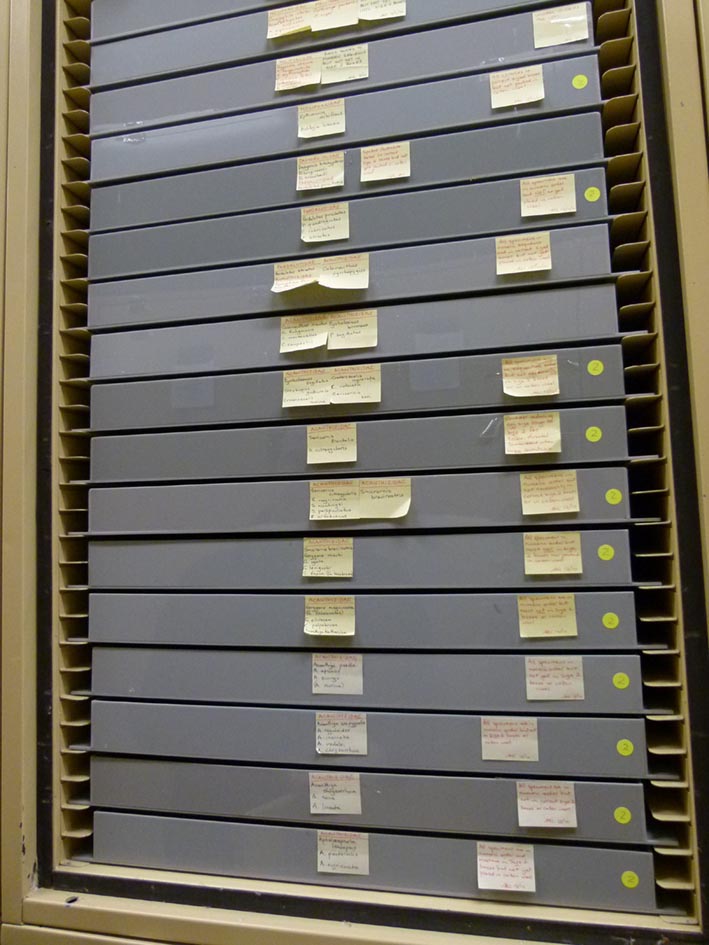
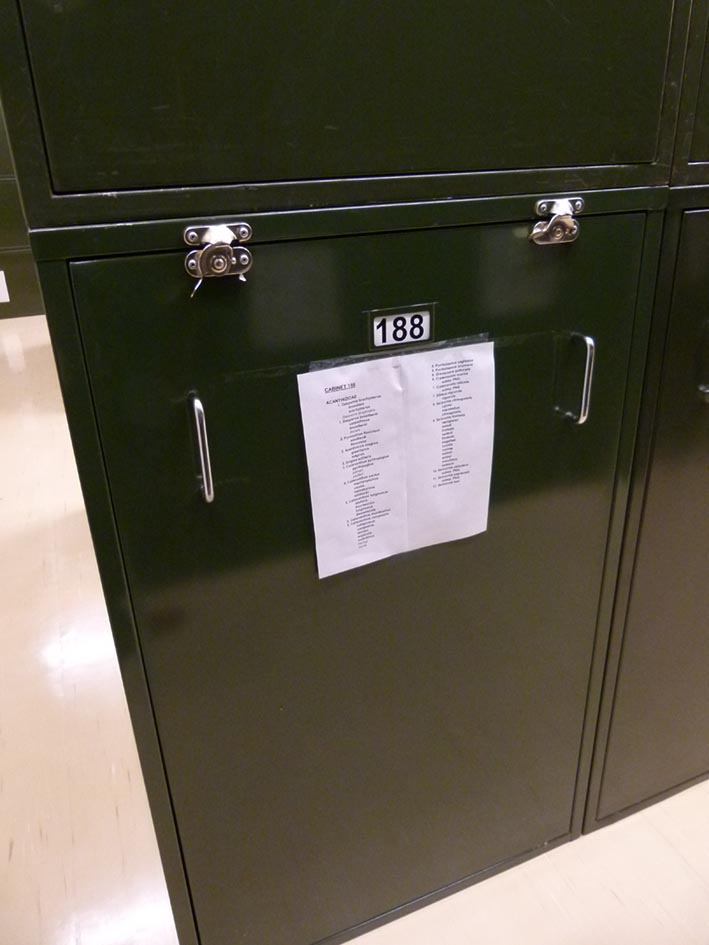
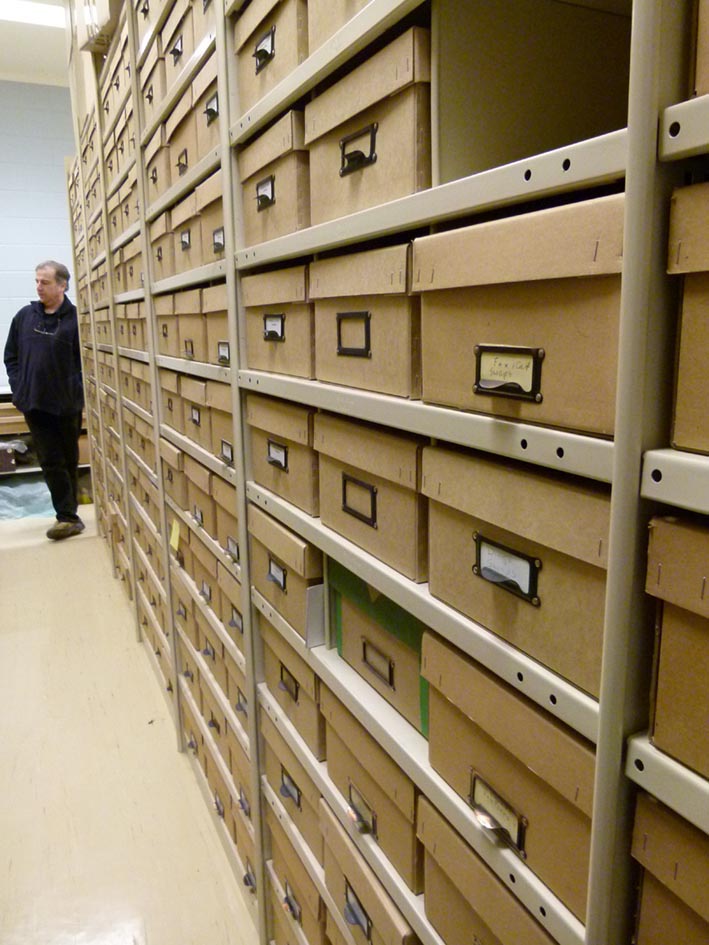
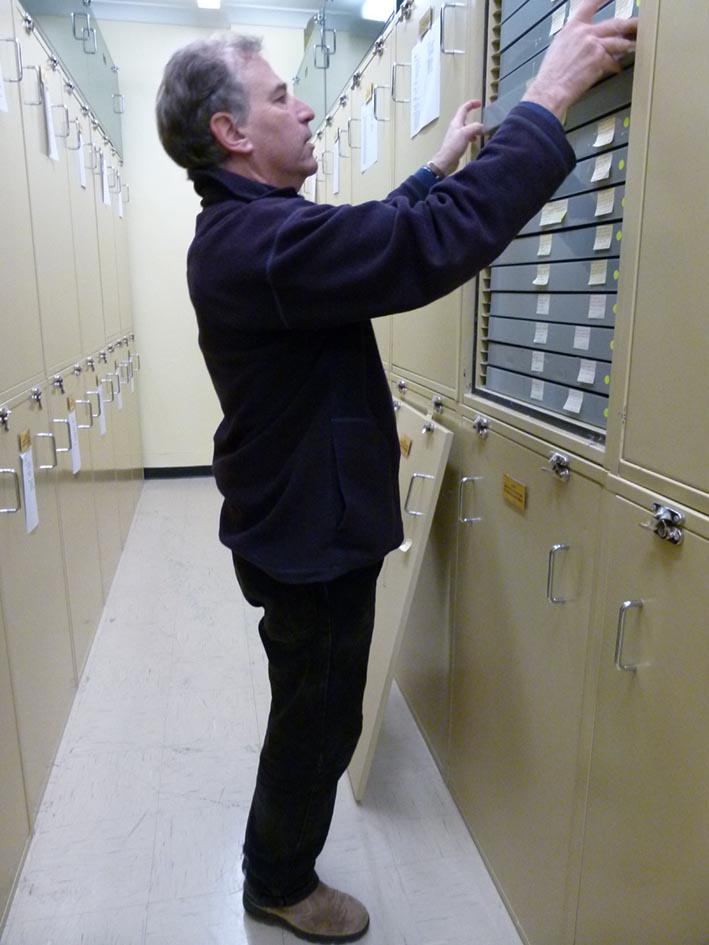
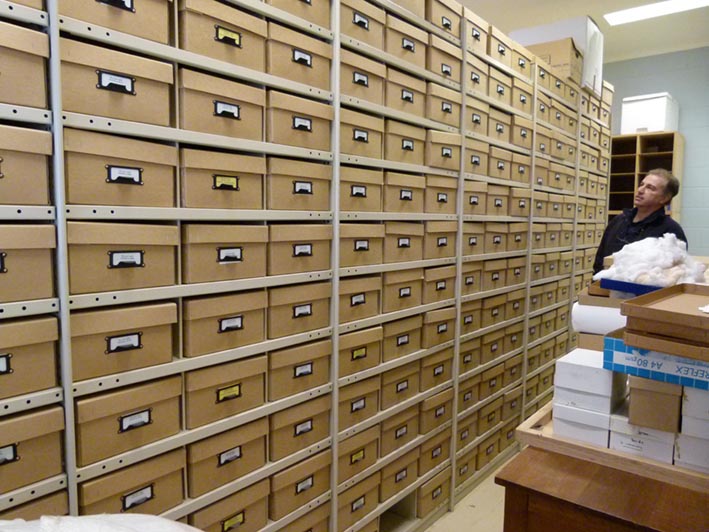
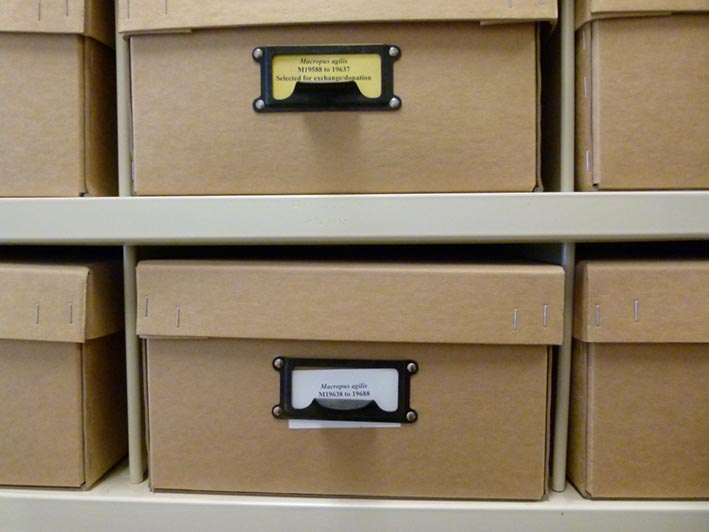
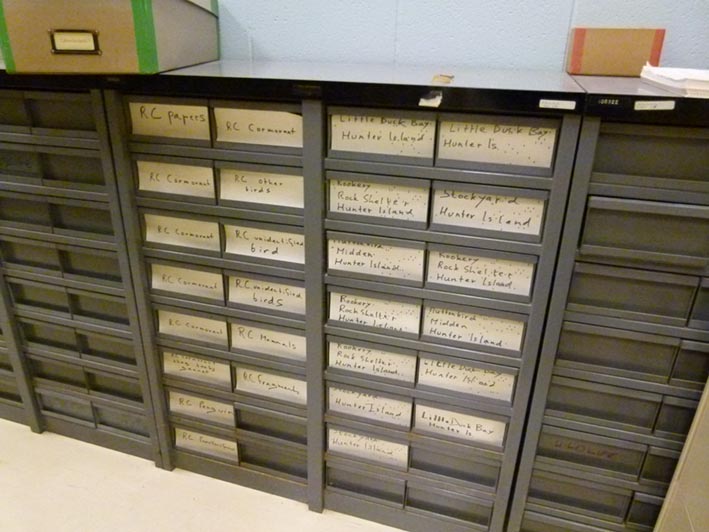
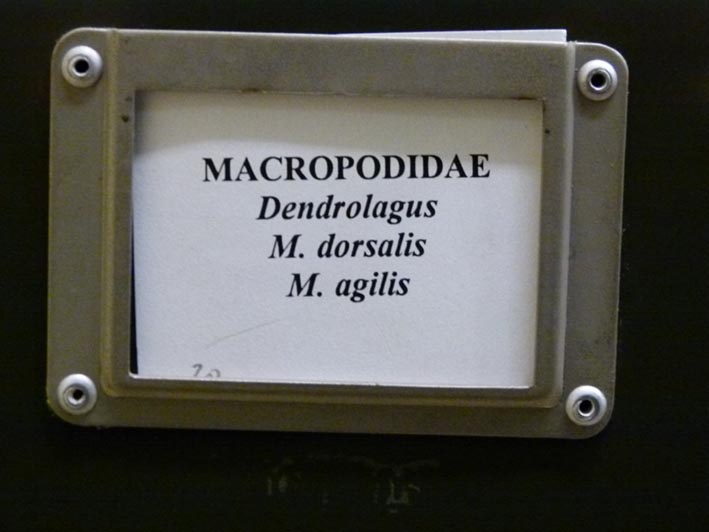
We close the door of the sound archive and I imagine the potential cacophony of 60,000 wildlife calls and the anomaly of this acoustic record located here alongside the array of wildlife specimens. Concealed in row after row of cabinets, shelves, draws, trays, boxes and jars are 200,000 specimens of mammals, birds, reptiles, amphibians, skins, eggs, bones and teeth and frozen tissue.

http://www.csiro.au/resources/ANWCContents.html#1
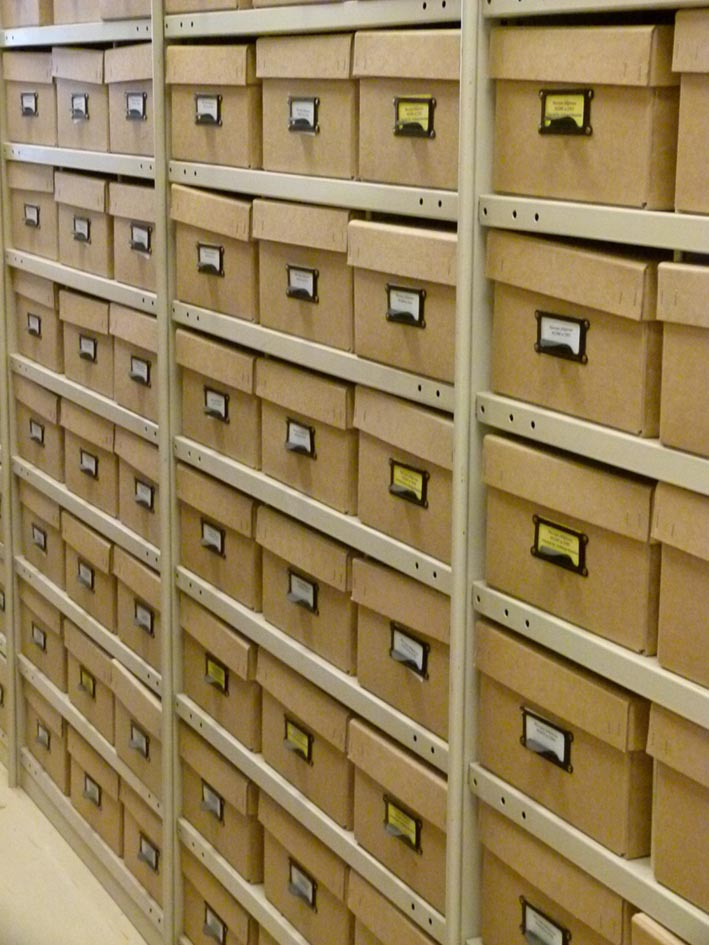


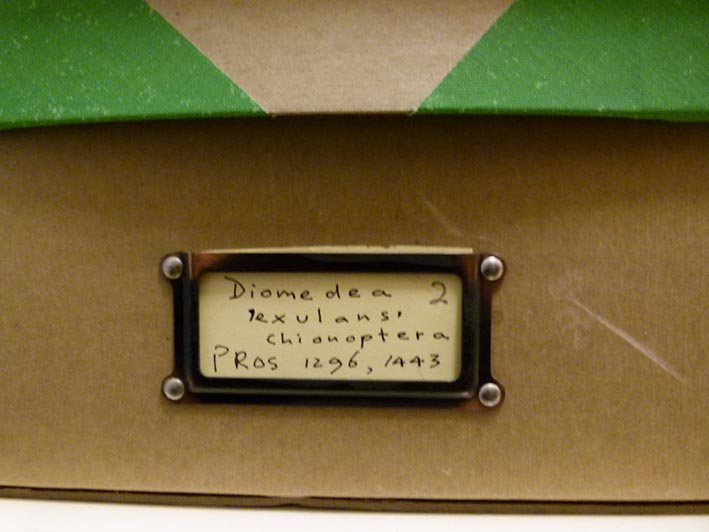
In every uniform aisles draws and boxes reveal specimens organized: classified, identified (numbered and named), meticulously measured, labeled and tagged and positioned. The order is deceptively static. Here small (and large) variations are scrutinized and analyzed yielding different sets of relationships. Specimens are repositioned, names and labels over written. Analysis of data and imaging techniques from DNA sequencing to micro-CT scanning, reveal new stories.
 

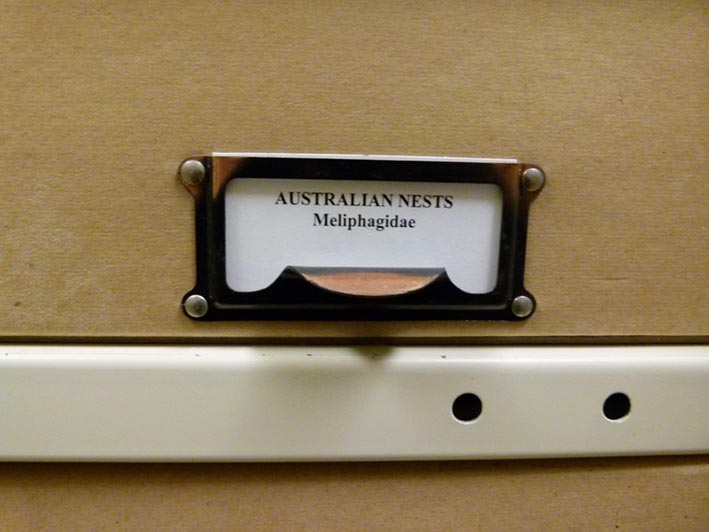
wildlife—fur, feathers, eggs and much, much more…….


on site

The first visit of the residency (14 july) is to The National Australian Wildlife Collection (ANWC) where I am welcomed by the Research Director and its Curator, Dr Leo Joseph. We meet in a bright open room displaying framed paintings and drawings (of live specimens), maps and charts.


sorting labeling measuring


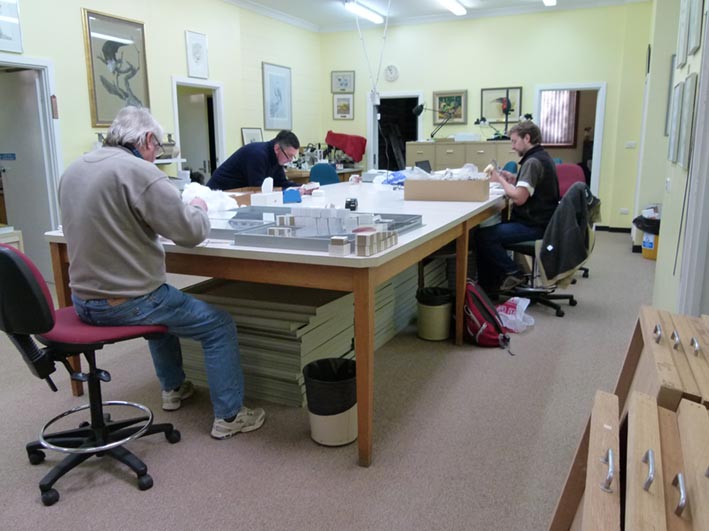
A quantity of empty boxes, wooden trays and draws have been neatly stacked in anticipation of the ongoing growth of the collection(s).  Work is underway around a large central table and and we interrupt the scene of industrious concentration with introductions and an explanations about my visit and the Synapse-CSIRO residency. Before we proceed to the collections themselves the activity underway presents a snapshot of the breadth and nature of the collection.


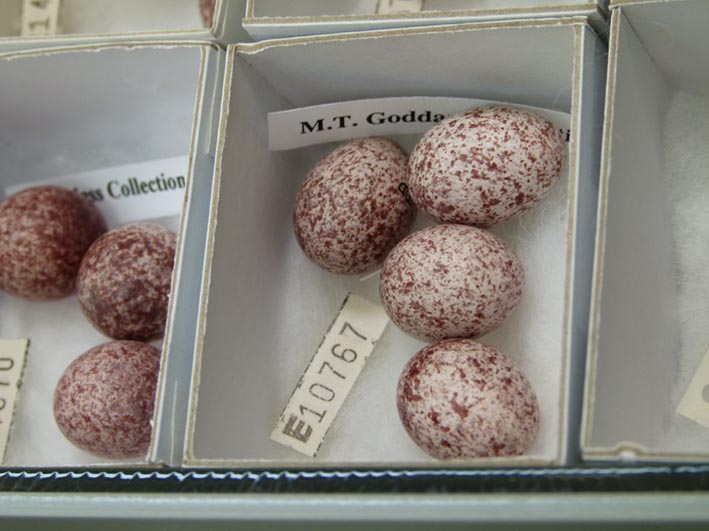
eggs of ..


Delicate speckled birds’ eggs are being systematically collated, labeled and sorted into boxes and nearby more small empty boxes are assembled, an indication of the ongoing task of storing and caring for these fragile specimens.  I juggle my pencil, pad and camera noting the references to reflectance spectrophotometry, research on cuckoo eggs, the curious heritage and hobby of egg collecting (oology).


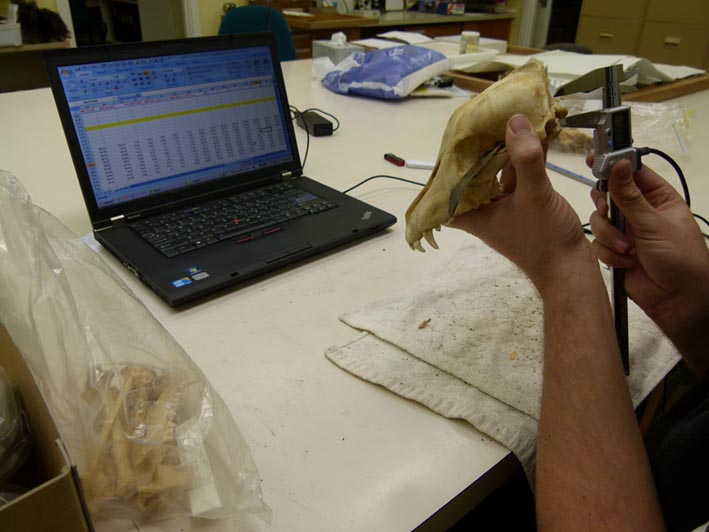
sorting labeling measuring 2


Further around the table a researcher carefully measures the skull of a  small mammal animal and he enters its details into a data base for further analysis. Across from him specimens on loan from another collection are being packaged in preparation for sending back. In a small side room another researcher enters (bird) data into his computer …and then I am guided into a connecting room with shelves storing possibly the most ephemeral of collections — sound.


.. the Collections

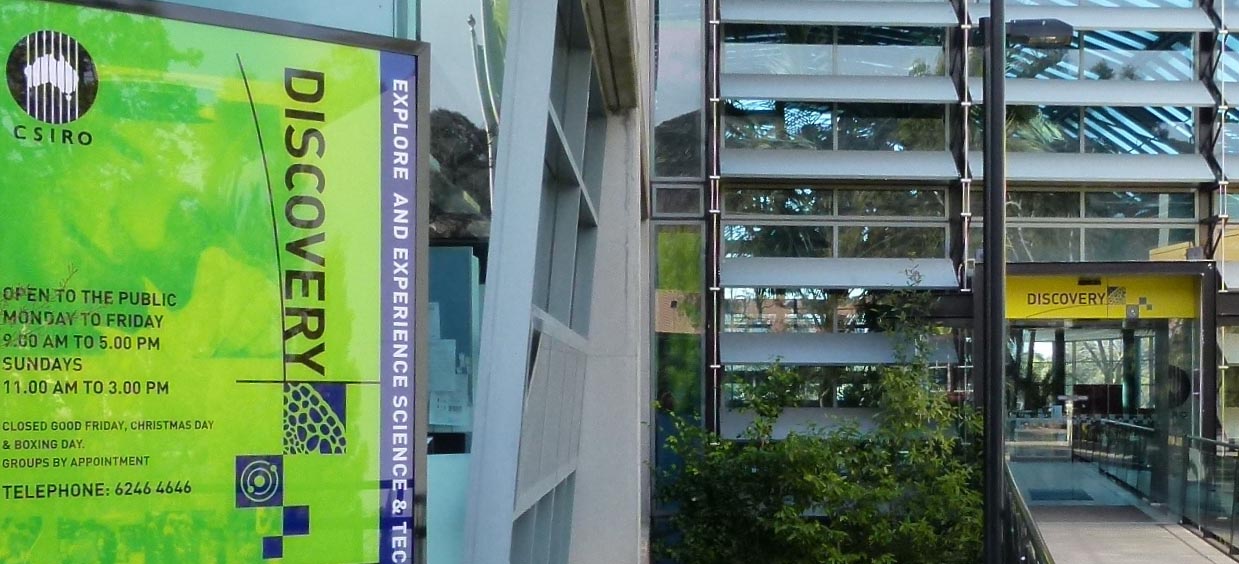
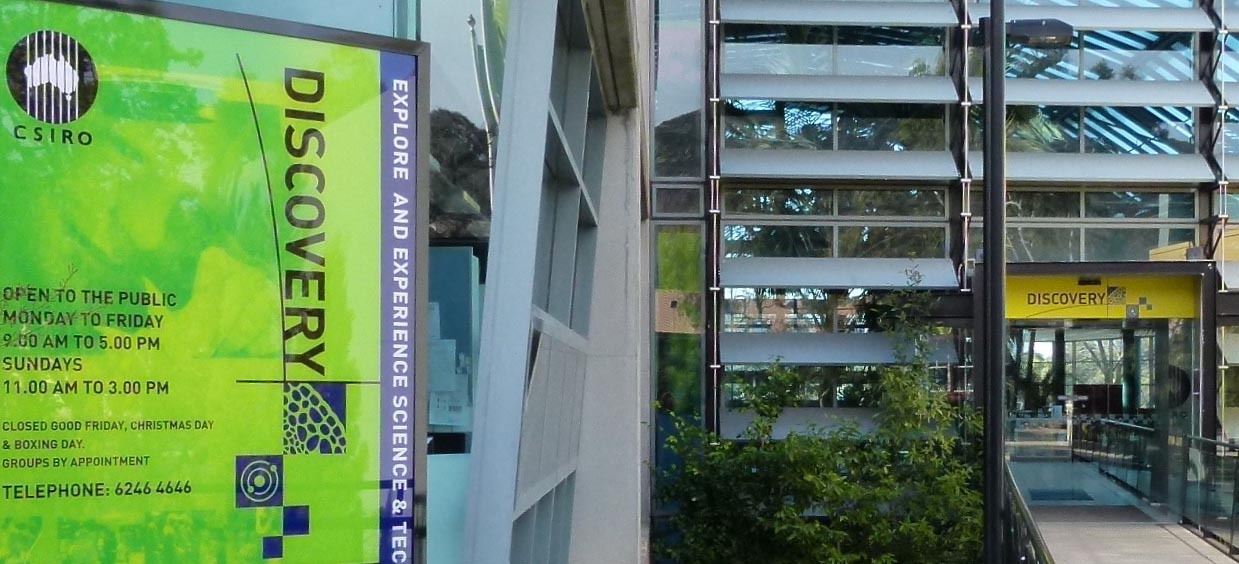
CSIRO Discovery Centre, Black Mountain, Canberra


True Stories
research commences at CSIRO Discovery Centre arranging meetings and visits to the Biological Collections and Research Facilities located in Canberra.  The Re-Imaging Nature exhibition and the subsequent artist’s floor talk are a valuable opportunity to introduce the project and highlight  imaging as central to the purpose of the residency. The Collections are extensive and first visits offer an insight into the fundamental nature of their role and the scope of research that they support in CSIRO. With the Australian National Fish Collection (ANFC)  in Tasmania on the agenda for later in there residency, I begin with the most immediate in Canberra: the Australian the National Wildlife Collection (ANWC),  National Insect Collection (ANIC) and National Herbarium (ANH), Australian National Botanic Garden, the Australian Plant Phenomics Centre and the  National Soil Archive.  For a later date are —the Australian Tree Seed; Living Microalge; Air ; Wood inhabiting Fungi and  Dadswell Memorial Wood Collection.